What period
speaks to you?
Choose the era that pulls you in. We'll tailor your first five questions to match.
Walk the timeline.
Answer as you go.
Each era below contains a real Canvas question. Tap an answer — the explanation appears instantly. By the time you reach Contemporary, you'll have learned five things you didn't know an hour ago.
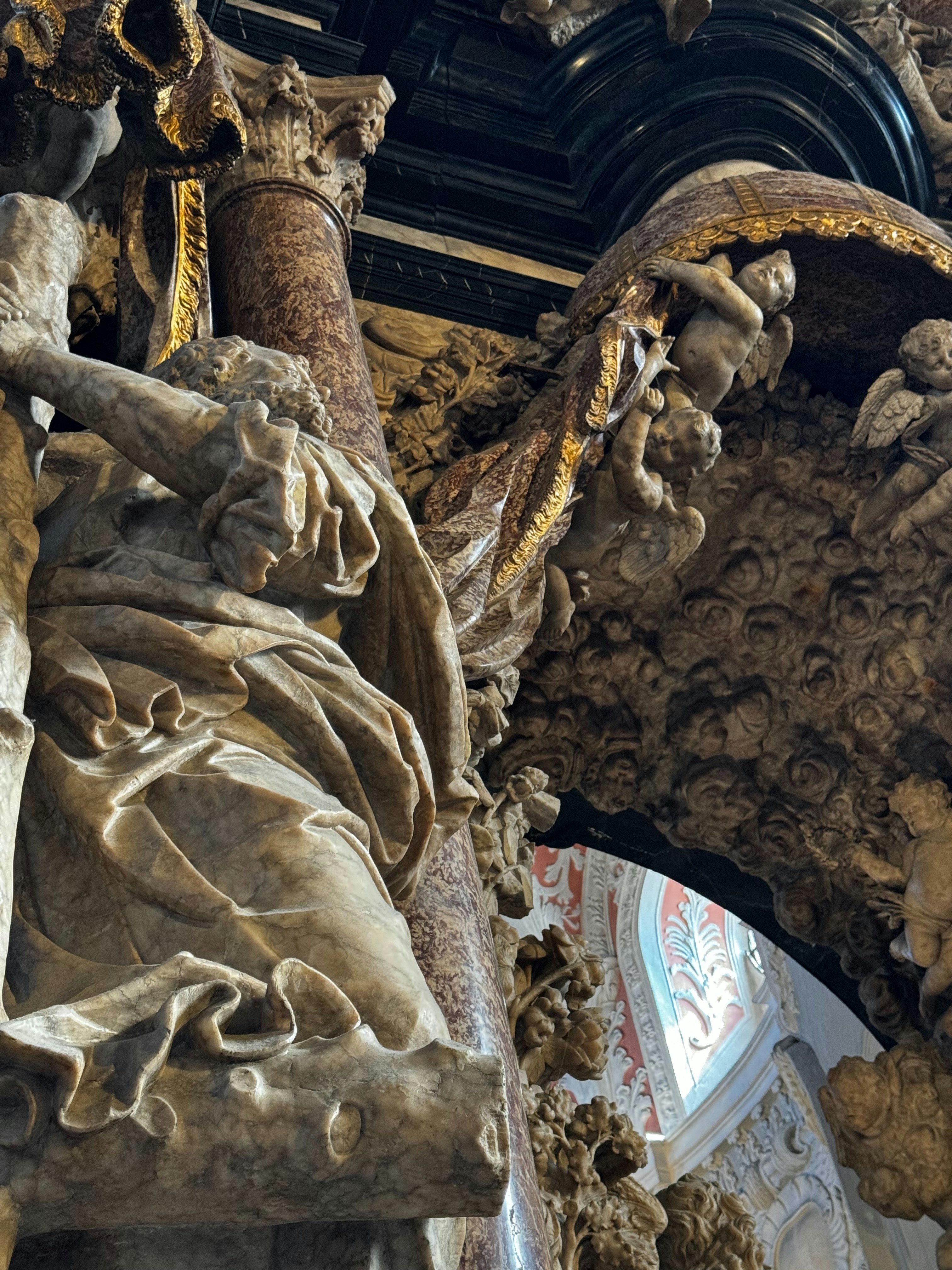
Art as offering, not decoration.
From Lascaux's bison to the Elgin Marbles, ancient artists created for gods, pharaohs, and the dead. The concept of art-for-art's-sake wouldn't arrive for another two millennia.
Sample Question
The Parthenon's columns appear perfectly straight. Why is this remarkable?
Curator's Note
Greek architects used entasis — a slight convex swelling along the column shaft — to make columns appear perfectly straight to the human eye. Without it, truly straight columns would appear to bow inward.
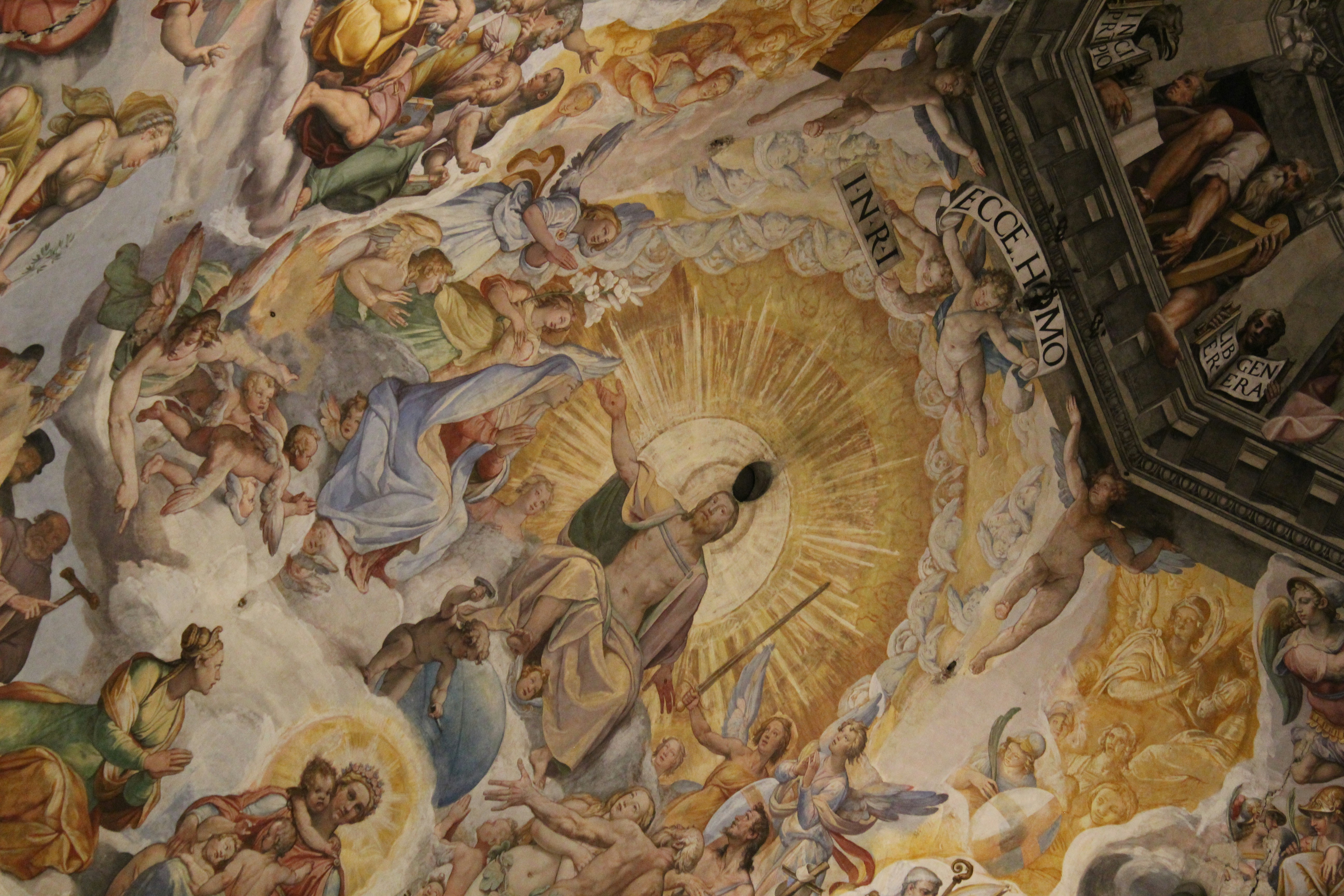
The human body rediscovered.
Leonardo dissected corpses to understand musculature. Michelangelo mapped every tendon on the Sistine ceiling. The Renaissance wasn't a rebirth of art — it was a rebirth of looking.
Sample Question
Vermeer's Girl with a Pearl Earring uses a specific technique to make the skin glow. What is it?
Curator's Note
Vermeer built up luminosity through multiple thin glazes of lead white over a warm ochre ground, allowing light to seem to emanate from within the skin rather than reflect off its surface.
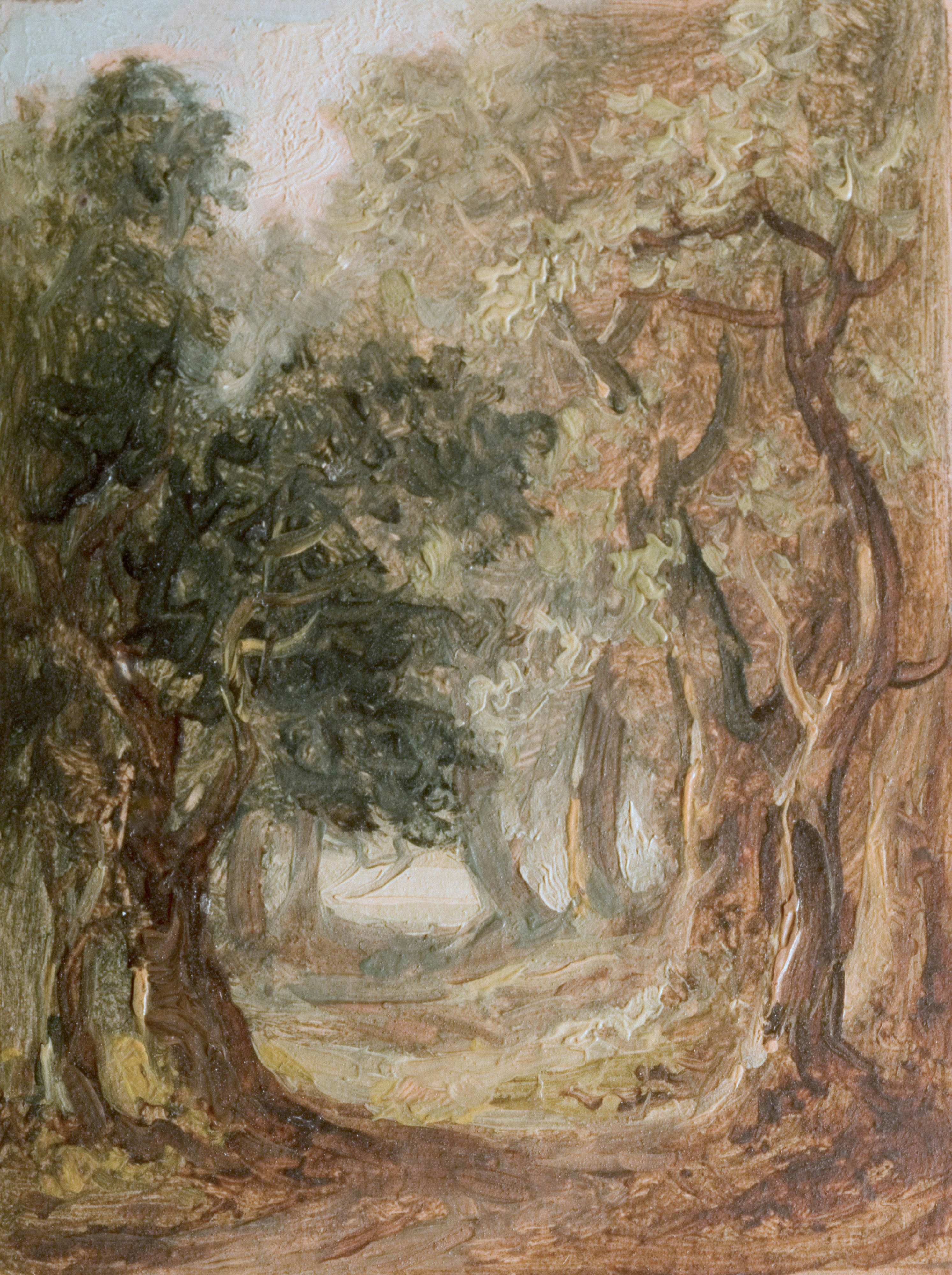
Light, not line. Moment, not monument.
When the Paris Salon rejected their canvases, Monet, Renoir, and Degas held their own exhibition. A critic called their work "merely impressions." They kept the name.
Sample Question
Monet painted his Haystacks series more than 25 times. His actual subject was:
Curator's Note
Monet's Haystacks series was a radical argument: the same object, painted under different light conditions, becomes entirely different paintings. The haystacks were almost incidental — light was the true subject.

What if a painting didn't represent anything?
Rothko wept when asked about his color field paintings. Pollock poured paint from a can. Picasso shattered a face into simultaneous viewpoints. Modern art asked whether representation itself was the problem.
Sample Question
Mark Rothko insisted his paintings be hung with their bottom edge at what height — and why?
Curator's Note
Rothko specified that his paintings hang low, with the bottom approximately 18 inches from the floor, so they envelop viewers at eye level. He wanted the experience to be intimate and overwhelming — "a relationship between the picture and the person."
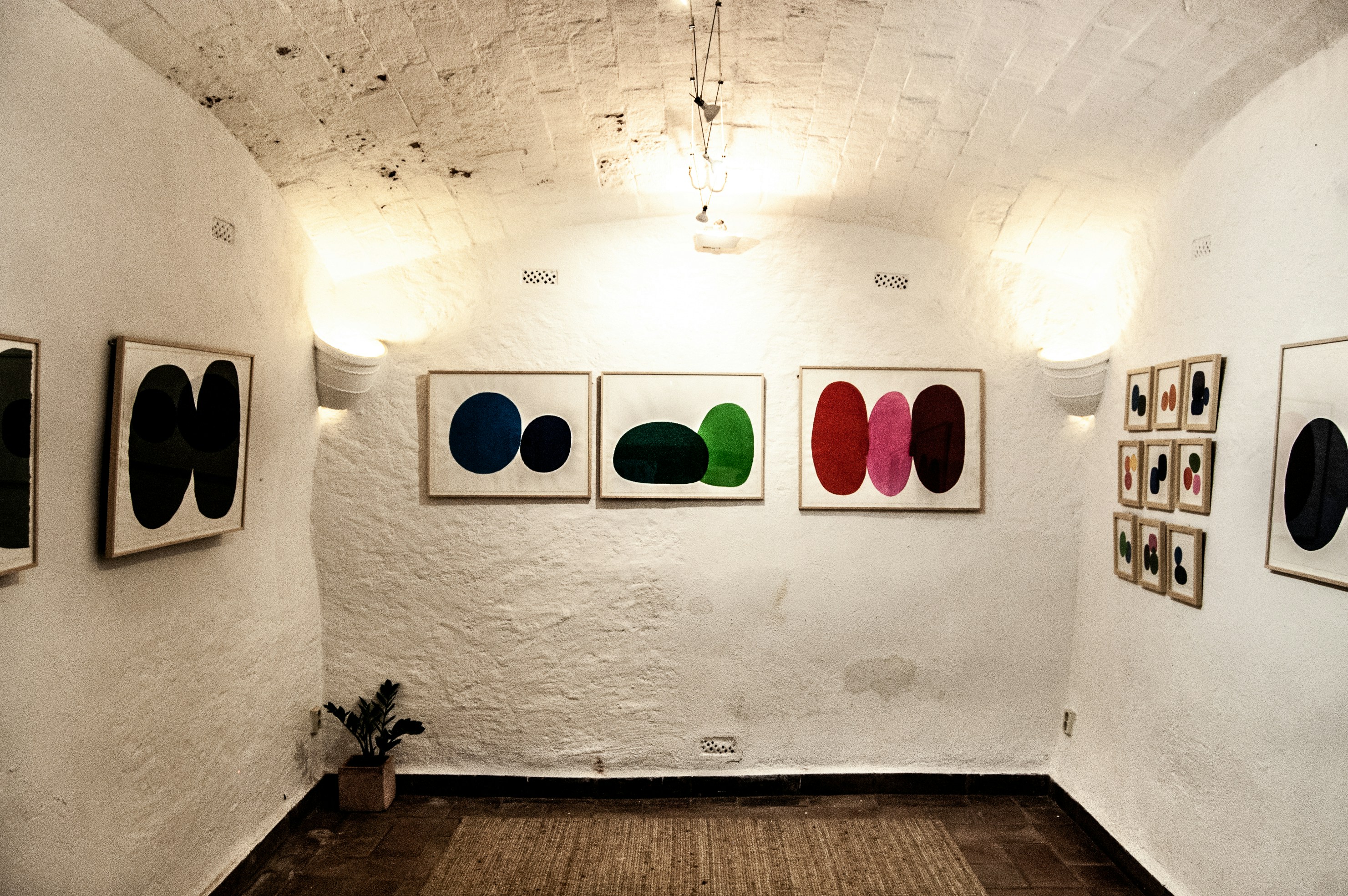
The museum walls came down.
Kara Walker cut silhouettes out of black paper and filled entire gallery walls. Ai Weiwei filled the Tate Turbine Hall with 100 million porcelain sunflower seeds. Contemporary art asks who gets to make it, who gets to see it, and who gets to decide it counts.
Sample Question
Ai Weiwei's Sunflower Seeds (2010) used 100 million hand-painted porcelain seeds. The work's primary argument was:
Curator's Note
Each of the 100 million seeds was hand-painted by artisans in Jingdezhen. The work holds multiple readings at once: the seeds reference Mao's sunflower propaganda, but also individual labor lost in mass culture — every seed unique, yet no single seed distinguishable from the mass.
You just answered 5 questions. The app has 2400+.
Start Your First Full QuizThe AP Art History
Starter Pack — Free.
50 must-know works, the 12 AP exam movements, and the 8 formal analysis terms that appear in every free-response question. One PDF, no account needed.
The moment it clicks.
"I stood in front of the Vermeer at the Frick for fifteen minutes. I finally understood the light. Canvas had drilled me on lead white glazing three days before."

"My tour groups used to glaze over at the Baroque section. Now I open with a question from Canvas — "why does this painting feel like a stage" — and they never stop asking."

"I'm a retired accountant. I took one of those audio tours at the MoMA and felt like I was missing something. Canvas gave me the vocabulary to go back and actually see."

The Baroque exam is in
eleven weeks.
Every bus stop, every waiting room, every five minutes before sleep is a question you haven't answered yet. Canvas fits where textbooks don't.